


Mastering High Dust Cleaning: Essential Tips for a Pristine Home
We all know that dust seems to have a mind of its own, especially in our homes. It loves to settle in those spots we usually forget about, like the tops of cabinets or the highest corners of rooms. Tackling this 'high dust' can feel like a chore, but keeping it under control is key to a truly clean space. We're going to walk through why this dust builds up and how we can effectively get rid of it, making our homes feel fresh and pristine.
Key Takeaways
- Dust naturally gathers in high, hard-to-reach places due to air currents and movement, impacting air quality and potentially causing health issues or fire hazards.
- Using the right tools, like extendable poles and specialized attachments, is vital for effective and safe High Dust Cleaning without needing ladders.
- Regularly cleaning these elevated areas, working from top to bottom, helps maintain a cleaner environment and prevents the buildup of dust and allergens.
Understanding High Dust Accumulation
We often focus on the dust we can see on surfaces at eye level, but what about the dust that settles way up high? It's easy to forget about those ceiling corners, fan blades, and the tops of cabinets. Yet, these elevated areas are prime spots for dust to gather. We've noticed that dust doesn't just magically disappear; it tends to float and then settle. Think about it: when we walk, open doors, or even just move around, we stir up tiny particles. These particles are incredibly light, made up of things like skin cells, fabric fibers, dirt, and even pollen. Because they're so light, they get carried upwards by air currents, whether that's from our heating and cooling systems, or just the natural movement of warm air.
Why Dust Collects In Elevated Areas
So, why do these high places become such dust magnets? It's a combination of physics and everyday activity. As we mentioned, dust particles are lightweight. When they become airborne, they naturally rise. This upward movement is often helped along by air circulation from HVAC systems, fans, or even just the general airflow within a building. Warm air rises, and it carries dust with it. Once the air movement slows down or stops, the dust particles settle. Where do they settle? Often, it's on the first available surface, which, if you're looking up, means ceiling beams, light fixtures, the tops of shelves, vents, and the upper edges of walls. These spots are frequently out of sight and therefore, out of mind when it comes to regular cleaning.
The Impact Of High Dust Buildup
It might seem like just a cosmetic issue, but that high dust can actually have a real impact on our homes and our well-being. For starters, that dust isn't just inert particles; it can harbor allergens, mold spores, and even bacteria. When these get disturbed, perhaps by a strong draft or during cleaning, they can become re-suspended in the air we breathe. This can be a problem for anyone with allergies or respiratory issues. Beyond health concerns, a significant buildup of dust, especially near electrical components or in ventilation systems, can pose a fire hazard. It's something we really need to be aware of. Plus, a visibly dusty environment just doesn't feel as clean or welcoming, does it?
Over time, dust and debris accumulate in hard-to-reach overhead areas. This buildup can affect air quality, create potential fire risks, and detract from the overall cleanliness of our living spaces. Addressing these high-dust zones is key to a truly pristine home.
Effective High Dust Cleaning Strategies
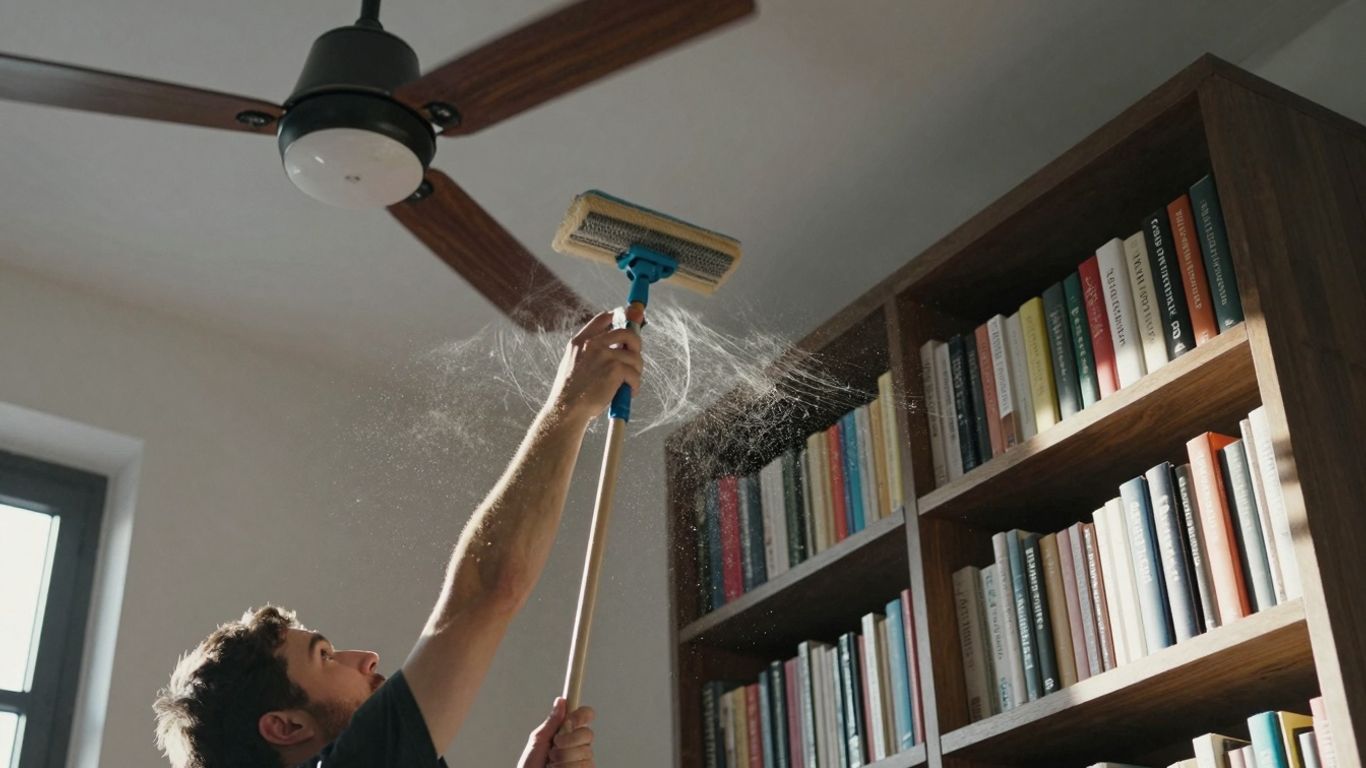
Now that we understand why dust likes to hang out in those high places, let's talk about how we can actually get rid of it. Tackling dust that's out of reach might seem a bit daunting, but with the right approach and tools, it's totally manageable. We've found that using specialized equipment makes all the difference, turning a potentially difficult job into a straightforward one.
Choosing The Right Tools For High Dust Cleaning
When we're dealing with dust bunnies the size of small pets clinging to ceiling fans or cobwebs that have become architectural features on beams, standard cleaning supplies just won't cut it. We need tools that can extend our reach safely and effectively.
Here are some of the tools we rely on:
- Telescopic Poles: These are a game-changer. Made from lightweight materials like carbon fiber, they can extend to reach impressive heights, sometimes up to 40 feet. This means we can clean from the ground, avoiding the need for ladders or scaffolding, which is a huge safety win.
- Specialized Cleaning Heads: Poles are great, but they need a partner. We use various attachments like static-dissipating brushes for dry dusting, flexible vacuum heads that can get into nooks and crannies, and microfiber sleeves that are gentle on delicate surfaces. The key is having the right head for the specific job, whether it's dusting a light fixture or cleaning out a vent.
- Vacuum Systems: For a truly dust-free clean, especially in sensitive areas or when dealing with a lot of debris, a vacuum system is indispensable. Pairing our high-reach poles with a commercial vacuum, ideally one with a HEPA filter, means we capture the dust rather than just moving it around. This is particularly important for improving air quality.
Best Practices For High Dust Cleaning
Having the right gear is only half the battle. How we use it matters just as much. We've learned a few things over time that help us clean efficiently and thoroughly.
- Work Top-Down: It sounds simple, but it's a rule we never break. Always start with the highest surfaces and work your way down. This way, any dust or debris that falls during cleaning doesn't land on an already cleaned area, saving you from having to re-clean.
- Use Appropriate Attachments: Don't try to force a brush into a space meant for a vacuum head, or vice-versa. Matching the tool to the task—whether it's a curved brush for ductwork or a flat head for beams—makes the job easier and more effective.
- Regular Maintenance of Tools: Our cleaning tools need to be clean themselves to work well. We make sure to wash microfiber heads after each use, check poles for damage, and ensure vacuum filters are clean. This keeps our equipment in top shape and ready for the next job.
Cleaning high areas might not be the most glamorous part of keeping a space pristine, but it's incredibly important for air quality and overall cleanliness. By using the right extendable poles and attachments, we can tackle these often-overlooked spots safely and efficiently, making a real difference in the environment we're cleaning.
Remember, consistency is key. Regular high dusting prevents massive build-up, making future cleaning sessions quicker and easier. It’s all about maintaining that clean, fresh feeling throughout the entire space, from floor to ceiling.
Dealing with high dust can be a real challenge, but having the right methods makes all the difference. Our guide covers simple yet powerful ways to tackle even the toughest dust buildup, ensuring a cleaner space. Ready to learn how to get rid of that stubborn dust for good? Visit our website for the full scoop on effective high dust cleaning strategies!
Wrapping Up Our High Dusting Journey
So, there we have it. Tackling those high-up dust bunnies might seem like a chore, but with the right approach and tools, it's totally doable. We've gone over why dust likes to hang out in those hard-to-reach spots and how to get it down safely. Remember, keeping those overhead areas clean isn't just about looks; it's about making our spaces healthier and safer for everyone. We hope these tips give you the confidence to take on your next high dusting project. Happy cleaning!
Share


