


What Is Hard Water? Understanding Its Role in Water Quality and Treatment
When it comes to water quality, few concepts are as central—or as misunderstood—as hard water. Whether you're designing a pure water system or trying to make sense of TDS measurements, understanding what hard water is and how it impacts water systems is foundational. This blog will cover the basics of hard water, the chemistry behind it, and its broader implications for water purification, softening, and total dissolved solids (TDS) management.
What Is Hard Water?
Hard water is water that contains high concentrations of dissolved minerals, primarily calcium (Ca²⁺) and magnesium (Mg²⁺) ions. These minerals are naturally picked up as water moves through soil and rock, especially limestone and chalk.
Common Indicators of Hard Water
- Soap scum and reduced lather from soaps and detergents
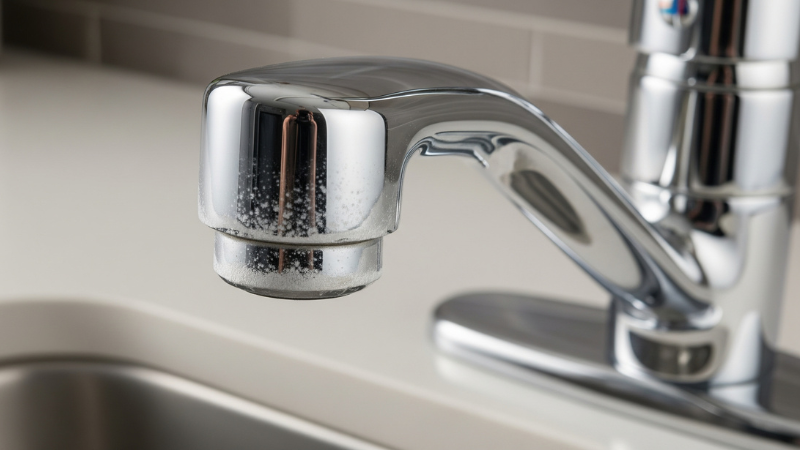
- Mineral deposits on faucets, glassware, and inside pipes
- Reduced efficiency and lifespan of water-using appliances
- Stiff or dingy laundry
Hardness: A Subset of TDS
Hardness is often confused with TDS (Total Dissolved Solids). While related, they’re not the same:
- TDS includes all dissolved substances in water—salts, metals, ions.
- Hardness specifically refers to divalent cations like calcium and magnesium.
All hardness contributes to TDS, but not all TDS contributes to hardness.
Classifying Hardness
Water hardness is typically measured in mg/L (ppm) of calcium carbonate equivalent:
| Hardness Level | mg/L (ppm) CaCO₃ | Description |
|---|---|---|
| Soft | 0–60 | Ideal for most uses |
| Moderately hard | 61–120 | Some scaling may occur |
| Hard | 121–180 | Soap inefficiency, scaling likely |
| Very hard | >180 | Frequent scaling and appliance issues |
Why Hard Water Matters in Pure Water Systems
In industries or applications that require high-purity water—such as pharmaceuticals, semiconductors, or car washes—hard water is a major liability.
Common Issues Caused by Hard Water
- Scaling: Mineral buildup damages reverse osmosis (RO) membranes and piping.
- Ion Interference: Disrupts deionization (DI) processes.
- System Stress: Hardness increases maintenance, energy costs, and component wear.
Pre-Treatment: The Role of Water Softeners
Water softeners use ion exchange to replace calcium and magnesium with sodium or potassium. This is often a critical pre-treatment step before introducing water into RO or DI systems.
Key Insight: A TDS of 150 ppm can be problematic if 140 ppm is from hardness. A TDS of 250 ppm with mostly sodium may be less damaging.
Conclusion: The Foundation of Water Quality Management
Hard water is more than an inconvenience—it can drastically impact water system performance and lifespan. Understanding the role of hardness as part of TDS is essential for designing efficient, long-lasting systems.
In future articles, we’ll explore:
Share


